Are there hot and cold spots in your home? Then, your furnace is heating unevenly. It can be due to a simple issue like a clogged filter or a major issue such as an old furnace that should be replaced. Here is why your furnace is heating unevenly, so you can consult a furnace repair service if required.
Causes Of Your Furnace Heating Unevenly
Dirty Air Filter
A furnace has an air filter installed to ensure clean air enters the furnace system and the home. It’s usually located inside the furnace or at the main return vent. As the filter gets clogged with dust and debris, it restricts airflow, and this can lead to uneven heating because some rooms may not receive enough warm air.
The solution to this is easy. You have to either replace or clean the air filter after checking which type you have. Disposable filters need to be replaced every 1 to 3 months, while you can clean and reuse washable air filters. Cleaning should be done once a month or so. Remember that when you put the washable filter back after cleaning, make sure it’s completely dry. Otherwise, mold could grow on and near the filter.
If you want to know which air filter type you have, examine the filter. Disposable filters’ frames are made of cardboard, whereas the frame of reusable filters is made of plastic or aluminum.
Closed Vents
Some homeowners close supply vents of their unused rooms so that other rooms get warm more quickly or to save energy. But experts suggest against it. When the furnace blower is pushing warm air into ducts, it has a balanced pressure that is according to the vents in the house because these vents keep pushing air to the rooms, keeping the balance.
But when some vents are closed or obstructed, this pressure is disrupted. And no, it doesn’t make other rooms warmer or make them warm more quickly. The increased pressure in the ducts could push air back and cause even lower airflow than normal. This can lead to some rooms being warm while others being cold.
So, avoid closing vents. When you have to, only close them slightly. Plus, look for obstructions blocking the vents and clear them.
Leaky Ductwork
Damaged or leaking ductwork is another cause of hot and cold spots in the house. It’s because the air is escaping from the leaks and cracks, so the part of the house near or after that leaky area may feel colder. This means the rooms closer to the furnace or the blower will feel warmer.
In homes that have a leakage in the ductwork, their rooms often feel drafty and get dusty more quickly. Moreover, the HVAC system may run longer than usual.
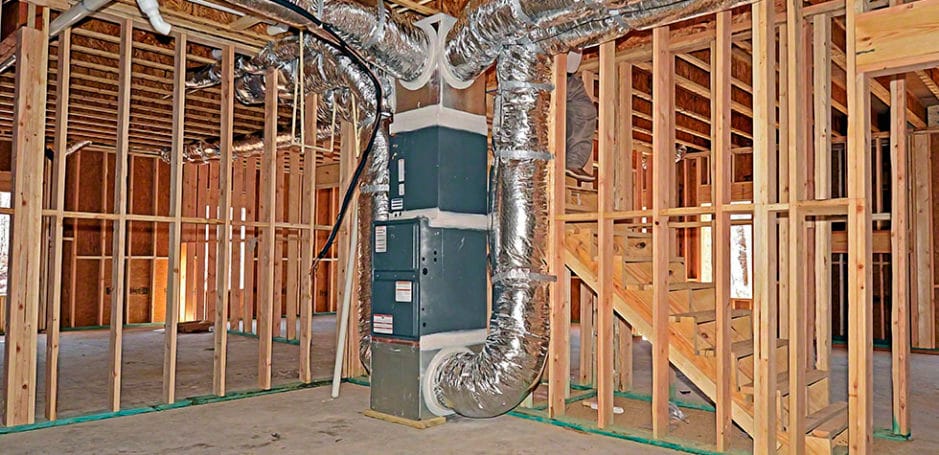
You can inspect the visible parts of the ductwork yourself. They can be in the attic and basement. However, the right action should be to have an expert check the air ducts because the leak location could be inside the walls.
Poor Ductwork Design
Ductworks are designed carefully for a smooth stream of airflow. If the ductwork design is bad, some rooms won’t receive enough airflow and may feel colder than others during winter. A big sign of this is that you have been experiencing uneven heating since you moved into the house or since you renovated the house or replaced the HVAC system.
In addition to that, a related issue is poorly placed vents, as they will also cause hot and cold spots in the house. You will need to consult an expert from HVAC companies Port Jefferson for inspecting the ductwork and suggesting ways to fix ductwork problems. The impact of poor ductwork design is even more on multi-story homes. Meanwhile, you can try to keep all vents open or slightly close vents near the furnace blower as a temporary fix.
Thermostat Problems
Many thermostat problems can cause uneven heating. A miscalibrated thermostat won’t detect the correct temperature, so the furnace may turn off sooner or run longer than required, leaving some rooms colder. Moreover, a battery-operated thermostat can go haywire if the battery is low.
Plus, any other problem, like dust and debris buildup on the thermostat or incorrect settings can also create problems. In that case, clean the thermostat after removing its cover or review the thermostat settings and make sure that the fan is at ON, not AUTO.
Poor Thermostat Placement
This is also a thermostat problem, but it is related to installation as well. Even if the thermostat is working fine, poor placement can lead to incorrect temperature readings, which means the furnace may short cycle or run for too long, causing uneven heating.
For instance, if the thermostat is installed near a heat source like direct sunlight or an appliance, it will detect warm temperatures sooner and will signal the furnace to turn off its heating cycle. But that would be an incorrect reading because it would be detecting warmth from the heat source while, in actuality, the home temperature would be colder. The result would be uneven heating.
Other places where a thermostat should not be installed are near a supply or return vent, on an exterior wall, in the kitchen, near a fireplace or any heat-producing appliance, or near the stairway. The right location is the central, interior living area of the house and away from the above factors.
Wrong Furnace Size
The furnace size impacts how well it warms up the house. A furnace that is too small for the house will keep blowing warm air, but still won’t be able to properly heat all the rooms evenly. This will increase power bills and the furnace might fail prematurely as well.
The other case is the furnace being too big for the house. In this, the furnace will quickly push warm air, the thermostat may detect the desired temperature, and the furnace shuts down too soon. This won’t allow even heat distribution, leading to hot and cold spots in the house.
Even if your furnace size was correct but your house underwent a renovation where you added more space, then the same furnace could, now, be smaller for your house.
Poor Insulation
If the house is old, not insulated properly, or there are air leaks, some parts of the house may lose heat faster, which will make them feel colder. Apart from that, due to poor insulation, the furnace will stay on for longer, leading to stress on the unit and also high power bills. So, check the house insulation and fix air leaks.
Old Furnace
A furnace older than 15 years may be the reason for uneven heating in your house. It happens because the blower, the heat exchanger, and the overall performance of the unit degrade over time. So, if you have an older furnace or you’re repairing it often, consider a furnace replacement.
Conclusion
A furnace heating the house unevenly can be due to various reasons, so you should check the filter and air vents. If they are not clogged or blocked, have furnace services Huntington inspect your HVAC system.